Understanding Examples Of Synchronous And Asynchronous Sequential Circuits: A Comprehensive Guide for Robust Design
The distinction and proper application of synchronous and asynchronous sequential circuits represent a cornerstone of digital system design. Misunderstanding these fundamental architectures frequently leads to unpredictable system behavior, complex debugging cycles, and compromised operational reliability. Engineers often encounter frustrations stemming from subtle timing issues in synchronous designs or elusive race conditions in asynchronous counterparts, leading to significant project delays and system instability. This authoritative guide provides a meticulous analysis, offering a definitive pathway to understanding, designing, and troubleshooting these critical circuit types, thereby fostering long-term reliability and robust system performance. Adherence to these principles aligns designs with established industry standards, ensuring predictable and stable operation across diverse applications.
What are Synchronous and Asynchronous Sequential Circuits?
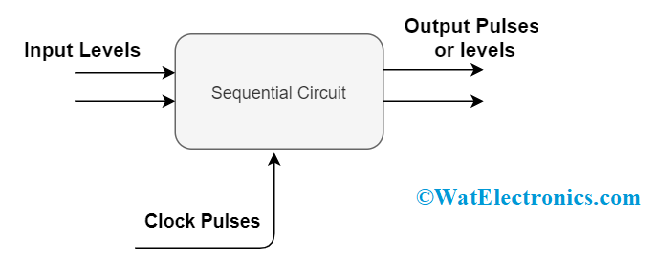
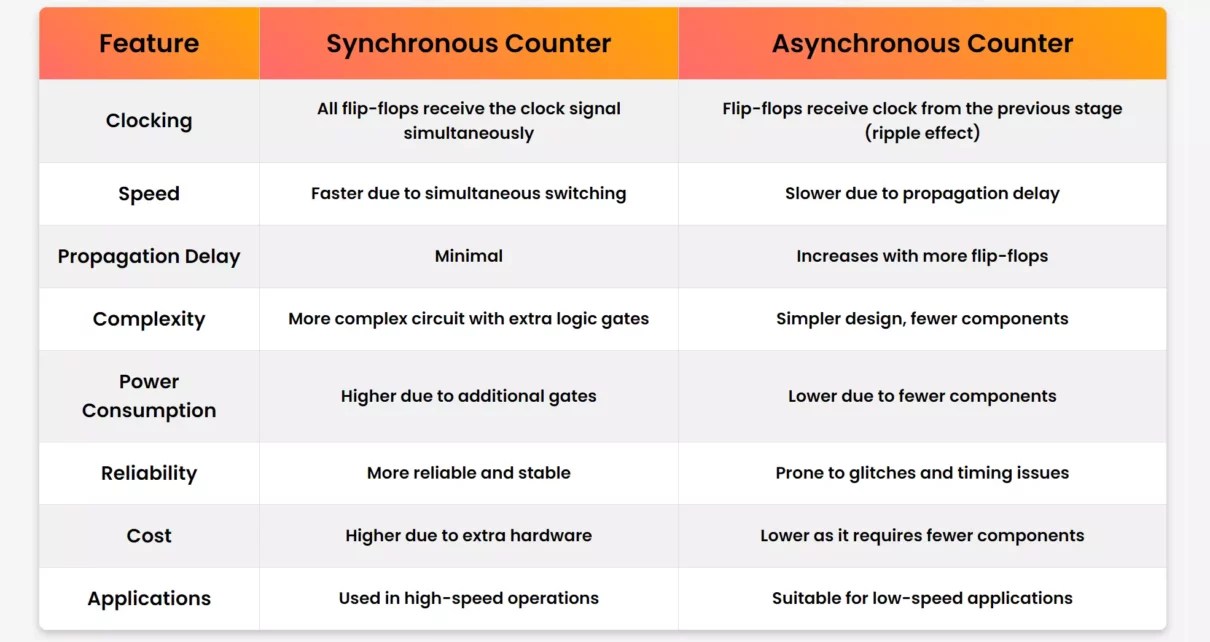
Synchronous sequential circuits alter their state only in response to a global clock signal, ensuring all state elements update simultaneously. Conversely, asynchronous sequential circuits change state based on the immediate availability of input signals or internal state transitions, operating without a central clock and reacting directly to event occurrences.
Core Components for Sequential Circuit Design
Effective construction of sequential circuits, whether synchronous or asynchronous, relies upon a distinct set of fundamental building blocks. The choice and integration of these components dictate the circuit's operational characteristics and overall performance.
- Flip-Flops (e.g., D, JK, T): Essential for synchronous designs, these clocked memory elements store a single bit and update their state only at specific clock edges, ensuring synchronized data flow.
- Latches (e.g., SR, D): Primary memory elements for asynchronous designs, latches are level-sensitive, meaning their output can change whenever their inputs change, provided the enable signal (if present) is active.
- Combinational Logic Gates: AND, OR, NOT, NAND, NOR, XOR gates are universally employed in both circuit types to compute the next state based on current inputs and present state.
- Clock Generator: A dedicated oscillating circuit providing the periodic timing signal crucial for synchronizing operations in synchronous sequential circuits.
- Input Signal Conditioning: Buffers, debouncers, and level shifters are often necessary to prepare external inputs for reliable processing, especially critical in asynchronous designs to prevent spurious transitions.
- Feedback Paths: Inherent to all sequential circuits, these connections route outputs or intermediate states back to inputs of combinational logic, enabling memory and state retention.
- Output Indicators/Drivers: Elements like LEDs, seven-segment displays, or power drivers that translate internal circuit states into observable or actionable outputs.
Design and Analysis Flow for Examples Of Synchronous And Asynchronous Sequential Circuits
A systematic approach to designing and analyzing sequential circuits is paramount for achieving functional correctness and operational stability. The following steps outline a robust methodology applicable to both synchronous and asynchronous architectures, with specific considerations highlighted.
- Problem Definition and State Diagram/Table Formulation:
Clearly articulate the desired system behavior. For synchronous circuits, this involves defining a sequence of states and the transitions between them based on inputs and clock events, typically represented by a state diagram or state table. For asynchronous circuits, focus on input-output relationships and stable states, often using a flow table or primitive flow table to represent the circuit's response to input changes.
- State Assignment:
Assign unique binary codes to each defined state. For synchronous circuits, various techniques like Gray coding or one-hot encoding can minimize logic complexity or reduce glitches. In asynchronous circuits, a critical aspect of state assignment is to avoid critical races, where the next state depends on the order in which internal state variables change. This often requires careful consideration of adjacent states in the state graph.
- Next-State and Output Logic Derivation:
Based on the state assignment and desired transitions, derive Boolean expressions for the next state variables and the circuit outputs. For synchronous circuits, these are typically functions of current inputs and present state variables, implemented using flip-flop excitation tables. For asynchronous circuits, this involves deriving logic for the next values of the internal state variables (often using set/reset inputs of latches) ensuring stable transitions and avoiding hazards.
- Component Selection and Circuit Implementation:
Choose appropriate memory elements (flip-flops for synchronous, latches for asynchronous) and combinational logic gates. Construct the circuit diagram based on the derived Boolean expressions. For synchronous designs, connect flip-flop inputs to the next-state logic outputs and route the global clock signal to all flip-flops. For asynchronous designs, carefully implement feedback paths from latch outputs back to combinational logic inputs.
- Timing Analysis and Verification:
This is a crucial step for both circuit types. For synchronous circuits, verify setup and hold times, clock-to-output delays, and propagation delays to ensure correct operation at the specified clock frequency. Analyze for clock skew and potential timing violations. For asynchronous circuits, conduct thorough hazard analysis (static, dynamic, function hazards) to ensure reliable transitions. Verify the absence of critical races and ensure that non-critical races settle to the correct stable state. Simulate the circuit with various input sequences to confirm functionality and stability.
- Prototyping and Testing:
Implement the design on a physical platform (e.g., FPGA, ASIC, breadboard with discrete logic) and rigorously test its operation under various conditions, including worst-case scenarios. Compare physical circuit behavior against simulation results to identify discrepancies.
Troubleshooting & Usage Guide for Examples Of Synchronous And Asynchronous Sequential Circuits
Diagnosing issues in sequential circuits requires a deep understanding of their operational nuances. Common symptoms often point to specific design or implementation flaws.
Metastability in Synchronous Circuits:
Symptom: A flip-flop output enters an unstable, unpredictable state, hovering between logic '0' and '1' for an indeterminate period before eventually settling to an incorrect or correct value. This often occurs when asynchronous inputs are directly fed into synchronous systems without proper synchronization.
Analysis: This indicates a violation of the flip-flop's setup or hold time requirements, usually at the interface between asynchronous and synchronous domains. The input signal changes too close to the active clock edge.
Solution: Implement a synchronizer using two or more cascaded flip-flops clocked by the same signal. This increases the probability that the asynchronous input will settle to a valid logic level before being sampled by the subsequent flip-flop, greatly reducing the likelihood of metastability propagating into the synchronous domain.
Race Conditions and Hazards in Asynchronous Circuits:
Symptom: The circuit produces incorrect outputs or enters an unintended state for certain input transitions. This behavior is often intermittent and sensitive to minor variations in gate delays.
Analysis: This points to race conditions (critical or non-critical) or hazards (static, dynamic, functional). A critical race occurs when the final stable state depends on the order in which internal state variables change, leading to unpredictable operation. Hazards are momentary spurious outputs due to unequal propagation delays through different paths in combinational logic.
Solution: For race conditions, carefully review the state assignment to ensure that