Examples Of Sequential Logic Circuits In Real Life Applications: An Authoritative Guide
Examples Of Sequential Logic Circuits In Real Life Applications: An Authoritative Guide
Understanding sequential logic circuits is paramount for anyone involved in modern electronics and digital system design. These circuits form the backbone of nearly every intelligent device, enabling complex operations that dictate the functionality of computers, industrial controls, and communication systems. A comprehensive grasp of their structure and operation is not merely advantageous; it is essential for developing reliable and efficient systems.
Engineers often encounter challenges when designing and troubleshooting systems incorporating sequential logic, from elusive timing issues to unpredictable state transitions. The intricacies of feedback loops and synchronized operations can obscure the root cause of malfunctions, leading to prolonged diagnostic periods and costly revisions. This guide addresses these common frustrations by providing a systematic analysis of sequential logic, focusing on clarity, practical examples, and a methodical approach to ensure robust system performance and long-term reliability.
What Are Sequential Logic Circuits?
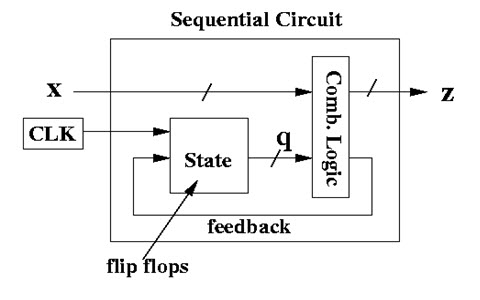
Sequential logic circuits are a class of digital circuits whose output state is determined by both the current input signals and the circuit's previous state. Unlike combinational logic, these circuits possess memory elements, allowing them to store information and execute operations in a specific sequence, making them fundamental for complex computational and control tasks in numerous real-life applications.
Core Components of Sequential Logic Circuits
The functionality of sequential logic circuits relies on several key components, each playing a critical role in memory, timing, and control:
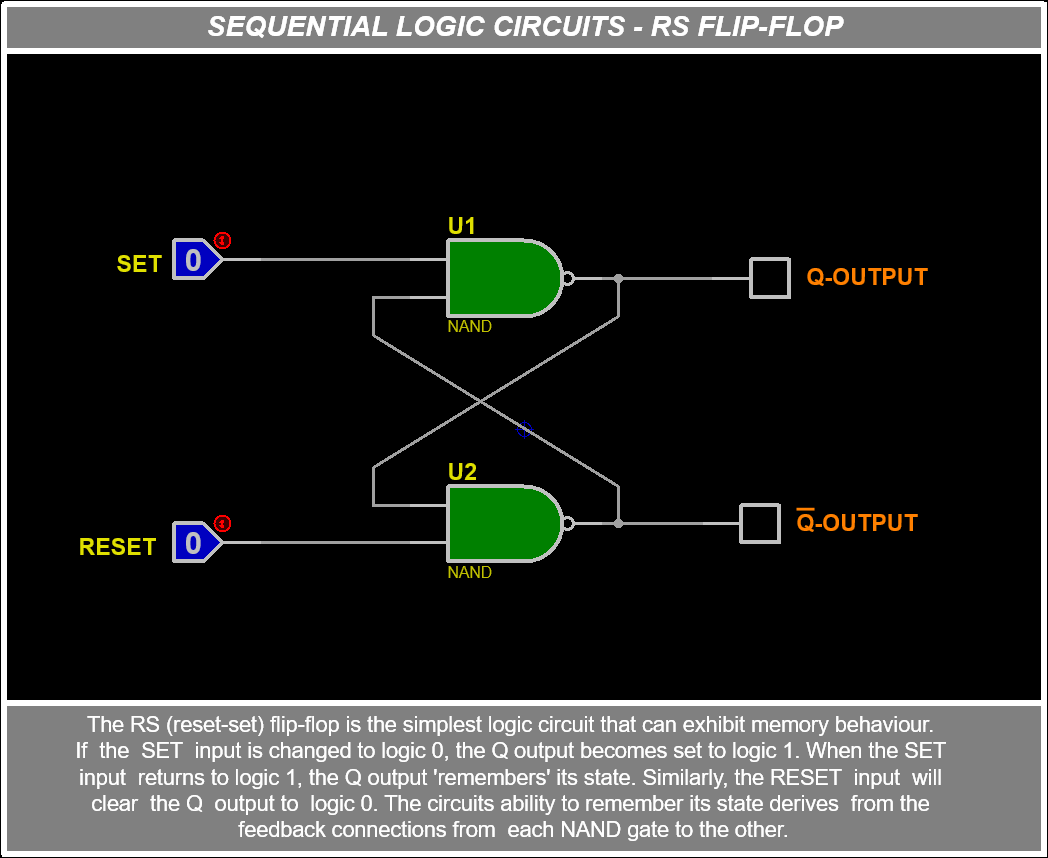
Flip-Flops (D, JK, T, SR): These are the fundamental one-bit memory elements, capable of storing a single binary digit. Their state changes are typically synchronized by a clock signal.
Latches: Similar to flip-flops but generally asynchronous, responding immediately to input changes while enabled. They are often used in simple storage applications or as components within more complex memory structures.
Clock Generators: Provide the periodic timing signals (clock pulses) that synchronize the operations of sequential circuits, ensuring orderly state transitions.
Combinational Logic Gates (AND, OR, NOT, XOR): Used for processing current inputs and generating control signals or next-state logic based on current and previous states.
Registers: Collections of flip-flops used to store multiple bits of data, crucial for microprocessors and data processing units.
Counters: Specialized sequential circuits designed to count clock pulses, generating a predetermined sequence of binary states.
Decoders/Multiplexers: Used for selecting or interpreting the output states of sequential elements to drive specific functions or displays.
Operational Flow: A Synchronous Counter Example
To illustrate the operational flow, consider one of the most common Examples Of Sequential Logic Circuits In Real Life Applications: a synchronous binary counter. This circuit transitions through a predefined sequence of states, typically incrementing or decrementing a stored value based on a clock signal. The conceptual wiring and data flow within such a circuit follow a precise sequence:
Initialization: The counter is set to an initial state, often zero, via an asynchronous clear or synchronous load input. This establishes the starting point for the counting sequence.
Clock Signal Arrival: A rising or falling edge of the clock pulse, generated by the clock generator, propagates through the circuit, synchronizing all memory elements (flip-flops).
Input Calculation for Next State: Based on the current output state of the flip-flops and any external control inputs, combinational logic (e.g., AND, XOR gates) calculates the necessary inputs for each flip-flop to achieve the desired next state. For a simple incrementing counter, this involves determining which bits need to toggle.
State Capture: At the precise moment of the active clock edge, each flip-flop captures its calculated input. The flip-flop's output then updates to this new state, but only after a slight propagation delay.
Feedback and Iteration: The new output states of the flip-flops are fed back as inputs to the combinational logic for the subsequent clock cycle. This feedback mechanism allows the circuit to "remember" its current count and calculate the next count.
Output Interpretation: The current binary state stored in the flip-flops may be directly output or fed into additional combinational logic (e.g., a 7-segment display decoder) to present a human-readable count.
This cyclical process, synchronized by the clock, allows the counter to advance through its sequence, providing a fundamental building block for timers, frequency dividers, and address generators, which are all prime Examples Of Sequential Logic Circuits In Real Life Applications.
Troubleshooting & Usage Guide for Sequential Logic
Troubleshooting sequential logic circuits demands a systematic approach, as issues can often be intermittent or appear deceptively simple. Addressing common symptoms effectively ensures reliable operation:
Incorrect State Transitions or Stuck States
Symptom: The circuit fails to transition to the expected next state, or it becomes trapped in an incorrect state. For instance, a counter might skip a number or reset prematurely.
Analysis & Solution: This often indicates faulty feedback paths, incorrect combinational logic preceding the flip-flops, or issues with control signals.
Verify Inputs: Use a logic analyzer or oscilloscope to check the data inputs to the flip-flops at the active clock edge. Ensure they align with the expected next state.
Examine Clock and Enable Signals: Confirm that the clock signal is clean, within specifications, and reaching all sequential elements. Check any synchronous or asynchronous enable/reset lines for proper activation or deactivation.
Review Logic Gates: Re-evaluate the combinational logic that generates the flip-flop inputs. A single incorrect gate or wiring error can propagate an erroneous next-state value.
Timing Violations (Setup/Hold Time, Clock Skew)
Symptom: Intermittent failures, especially at higher clock frequencies or under specific environmental conditions. Data appears to be missed or incorrectly latched.
Analysis & Solution: Timing violations are critical in synchronous systems.
Setup Time Violation: Data at a flip-flop's input changes too close to or after the active clock edge. Solutions involve ensuring sufficient delay for data to stabilize before the clock edge, often by optimizing gate delays or reducing clock frequency.
Hold Time Violation: Data at a flip-flop's input changes too soon after the active clock edge. This is less common in typical designs but can occur with very fast logic or improper clock gating. Adding small delays to the data path can sometimes resolve this.
Clock Skew: The clock signal arrives at different flip-flops at slightly different times. This can be problematic in large designs. Careful clock tree design and distribution are crucial, sometimes requiring clock buffers with matched delays.
Race Conditions or Glitches
Sequential Circuits Basics Types Examples Its ApplicationsSample Projects Navigate Our Library Of Ready To Use SamplesType Of The Sequential Logic Circuit Scientific DiagramSequential Logic Circuit Scientific DiagramSample Projects Navigate Our Library Of Ready To Use SamplesExamples Of Sequential Logic Circuits In Real Life Design TalkSequential Logic CircuitsOverview Digital Circuits 4 Sequential Adafruit LearningSequential Circuits Definition Types Logic Truth TablePpt Ee40 Lec 15 Logic Synthesis And Sequential Circuits ProfFlip Flop Combinational Logic Circuits And SequentialSequential Logic Circuits